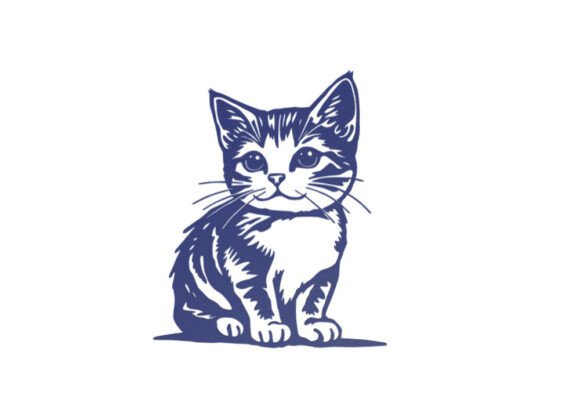
Kitty Wall Art: Easy 3D Printing for Unique Decor
The intersection of digital fabrication and interior design has opened a door for creators to produce highly personalized decor without the need for industrial manufacturing. Kitty Wall Art easy 3D Printing represents more than just a trend; it is a practical application of additive manufacturing that allows hobbyists, small business owners, and designers to create tactile, dimensional pieces that stand out in a market saturated with flat prints. Unlike traditional methods that require molding or casting, 3D printing enables the production of complex geometries and layered textures directly from a digital file, making it an ideal medium for capturing the playful and intricate nature of feline subjects.
What makes this approach particularly interesting is the balance between accessibility and artistic freedom. With the cost of entry-level printers dropping and the availability of high-quality filament increasing, producing professional-grade wall art is no longer restricted to large studios. Whether you are a freelancer looking to expand your product line or a homeowner wanting a custom piece for a nursery, the ability to iterate designs quickly means you can refine a cat's expression, adjust the scale, or experiment with materials until the result perfectly matches your vision.
Exploring Design Possibilities and Styles
When approaching Kitty Wall Art easy 3D Printing, the design phase offers immense flexibility. The medium supports a wide range of aesthetic interpretations, from hyper-realistic portraits to abstract, low-poly geometric forms. For those interested in modern or minimalist interiors, a low-poly cat head printed in a matte finish can serve as a striking focal point. The faceted surfaces catch light differently than smooth sculptures, creating dynamic shadows that change throughout the day.
Conversely, organic and fluid styles are equally achievable. By utilizing flexible filaments like TPU or experimenting with variable layer heights, creators can mimic the softness of fur or the curve of a stretching cat. Some designers opt for lithophane techniques, where the thickness of the print varies to create an image that only becomes visible when backlit. This is particularly effective for pet memorials or custom gifts, turning a photograph of a beloved pet into a glowing, three-dimensional tribute.
- Geometric & Low-Poly: Ideal for modern offices and tech-savvy environments, focusing on sharp angles and clean lines.
- Relief Sculptures: Semi-3D prints that mount flush against the wall, offering depth without protruding too far into the room.
- Interactive Elements: Designs that incorporate moving parts, such as a wagging tail or swiveling ears, adding a playful touch for children's rooms.
- Textured Fur Simulation: Advanced slicing settings that allow for micro-layering to simulate the look and feel of real fur.
Practical Applications for Different Audiences
The utility of Kitty Wall Art easy 3D Printing extends beyond simple decoration. For entrepreneurs and small business owners, this niche offers a scalable way to build a brand. Because 3D printing is an on-demand process, there is no need to hold expensive inventory. A seller can list various designs online and only print an item once an order is placed, significantly reducing financial risk. This model works exceptionally well on platforms like Etsy or at local craft markets, where customers appreciate the "made-to-order" aspect of the product.
Educators and community workshop leaders can also leverage these projects to teach STEM concepts. Creating kitty wall art involves understanding spatial reasoning, CAD software, and material properties. It provides a tangible goal for students learning about 3D modeling, turning abstract technical skills into a creative outlet. Furthermore, therapists and counselors working with children or adults might use the process of designing and printing animal figures as a form of art therapy, fostering a sense of accomplishment and creativity.
For interior designers, the ability to customize color and texture on the fly is a major advantage. Instead of being limited to stock colors, a designer can match a specific Pantone shade requested by a client or use multi-color filaments to create gradient effects that tie a room's palette together. This level of customization ensures that the artwork feels integrated into the space rather than just an afterthought.
Technical Considerations for High-Quality Results
To ensure that your Kitty Wall Art easy 3D Printing projects look professional and durable, attention to technical details is essential. The choice of material plays a significant role in the final appearance. PLA (Polylactic Acid) is the most common choice due to its ease of use and vibrant color options, making it perfect for colorful, decorative pieces. However, for items that might be exposed to sunlight or higher temperatures, PETG is a more robust alternative that resists warping and UV degradation.
Surface finish is another critical factor. While 3D prints inherently have layer lines, several post-processing techniques can elevate the quality of the piece. Sanding, priming, and painting can completely hide the layers, resulting in a smooth, gallery-ready sculpture. Alternatively, embracing the layer lines with a "wood-fill" or "stone-fill" filament can give the piece an artisanal, hand-carved look that adds character. When mounting the art, consider the weight of the print and the wall type. Using appropriate anchors or integrating a keyhole slot directly into the 3D model during the design phase ensures a secure and clean installation.
- Optimize Orientation: Print the model in an orientation that minimizes support marks on visible faces, often printing flat against the build plate for relief art.
- Layer Height Selection: Use finer layer heights (0.1mm to 0.15mm) for detailed facial features to capture nuance and expression.
- Infill Density: Adjust infill based on size; larger pieces may need 20-30% infill for structural integrity, while smaller details can be lighter.
- Post-Processing: Plan for sanding or painting early in the design process by adding tolerance for material removal if necessary.
Maintaining Consistency and Originality
In a growing market, maintaining originality is key to standing out. While many free models exist online, relying solely on them can lead to a saturated look. To keep your work fresh, consider modifying existing files or learning basic CAD skills to create unique variations. Changing the pose, adding accessories like bows or collars, or combining elements from different designs can result in a signature style that identifies your work immediately.
Consistency is equally important, especially for those selling multiple units. Documenting your print settings—temperature, speed, cooling fan intensity, and layer height—ensures that every piece in a batch looks identical. Keeping a log of successful prints helps troubleshoot issues quickly and maintains a high standard of quality control. This reliability builds trust with customers and establishes a reputation for professionalism.
Ultimately, Kitty Wall Art easy 3D Printing is about merging technology with emotion. Cats are beloved companions, and capturing their essence in a physical form resonates deeply with people. By focusing on quality execution, thoughtful design, and practical application, creators can produce wall art that is not only visually appealing but also meaningful. Whether used as a heartfelt gift, a business product, or a personal project, the potential for creativity in this space is vast and continually evolving.