Integrating Rabbit Sculpture 3D Papercraft into Modern Creative Workflows
The intersection of digital design and tangible art has created a unique niche for creators who value both precision and hands-on engagement. The Rabbit Sculpture - 3d Papercraft represents more than just a decorative object; it is a case study in how low-poly digital assets can be translated into physical reality through a structured, methodical process. For professionals ranging from interior designers to educators, and from hobbyists to small business owners, understanding the workflow behind these geometric models offers insights into efficiency, resource management, and aesthetic execution.
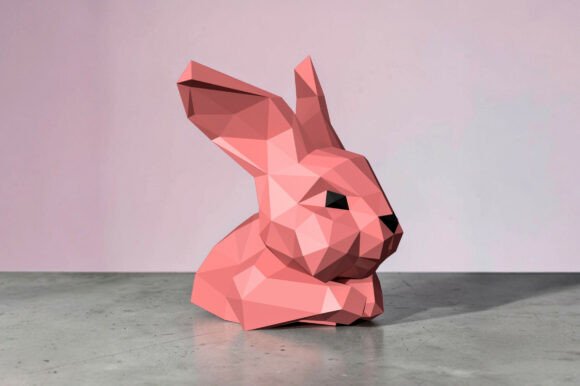
This specific project features a low-poly 3D papercraft sculpture of a rabbit, blending organic animal shapes with the sharp, calculated lines of digital modeling. Unlike traditional plush toys or ceramic figurines, this sculpture brings a "low-resolution" digital aesthetic into the physical world. Integrating such a project into your routine requires a clear understanding of the preparation phase, the assembly execution, and the final placement within a broader environment.
Pre-Production Planning and Asset Management
Before any cutting or gluing begins, successful implementation starts with asset acquisition and organization. When you acquire Rabbit Digital Files, you are typically receiving a suite of formats designed for compatibility across various tools. The standard package includes PDF, DXF, EPS, PNG, and JPG files. Each format serves a distinct purpose in the workflow:
- PDF: Ideal for immediate printing on standard home or office printers. It preserves scale and layout, ensuring that the tabs and fold lines align correctly when printed on A4 or Letter cardstock.
- DXF and EPS: These vector files are crucial for users with access to laser cutters or CNC machines. They allow for scaling without loss of resolution, enabling the creation of sculptures larger or smaller than the standard 60 x 46 x 52 cm dimensions.
- PNG and JPG: Useful for previewing the final look, creating marketing materials, or using as reference images during the complex assembly phases.
Effective workflow integration demands that you verify file integrity immediately upon download. Check that all layers are accessible if working with vector files and ensure the PDF print settings are configured for "Actual Size" or "100% scale." Scaling errors at this stage can render the tabs incompatible with the slots, causing structural failures later. This initial quality control step mirrors the diligence required in any professional project, whether it involves architectural blueprints or graphic design deliverables.
Resource Allocation and Tool Preparation
The transition from digital file to physical object relies heavily on the correct selection of materials and tools. The Rabbit Sculpture - 3d Papercraft is not merely a craft activity; it is an exercise in material science and patience. The recommended medium is A4 Letter Cardstock Paper. The weight of the paper is critical; too thin, and the structure lacks rigidity; too thick, and the folding becomes imprecise, leading to cracked edges.
To execute the assembly efficiently, gather the following toolkit before starting the timer. The estimated Assembling Time is between 3 to 4 hours, but this assumes a streamlined workspace where tools are within reach:
- Colored Printer: Essential for rendering the specific textures and gradients often embedded in the digital templates to enhance the low-poly effect.
- Craft Knife and Scissors: Use scissors for long, straight external cuts and a sharp craft knife for intricate internal details and tight corners.
- Scorer or Bone Folder: Perhaps the most vital tool for professional results. Scoring the fold lines before bending ensures crisp, geometric edges rather than rounded, amateurish curves.
- Non-working Ballpoint Pen: A practical alternative to a bone folder for defining fold lines without cutting through the paper.
- Ruler: Necessary for guiding the craft knife and ensuring straight scores.
- Glue: PVA glue or a high-quality glue stick is preferred for its drying time and bond strength.
Organizing these tools mimics a production line setup. By arranging your workspace so that cutting, scoring, and gluing stations are distinct, you reduce cognitive load and minimize errors. This approach is particularly beneficial for educators teaching spatial reasoning or entrepreneurs producing limited-run decor items for sale.
Execution: The Assembly Process
The core of the workflow lies in the assembly phase. This is where the abstract digital model transforms into a sophisticated physical entity. The process follows a logical sequence: print, cut, score, bend, and glue. However, the efficiency of this process depends on batch processing techniques.
Rather than cutting and assembling one piece at a time, a more effective method is to cut out all components first. Then, proceed to score every fold line across all pieces. Finally, pre-fold all tabs along the scored lines. This "batching" strategy, common in manufacturing and software development, allows you to focus on one type of motor skill at a time, reducing fatigue and increasing consistency. When you finally begin gluing, the parts are ready to snap together, significantly speeding up the construction of the 60 x 46 x 52 cm structure.
Attention to detail during gluing is paramount. Apply adhesive sparingly to the tabs to prevent seepage, which can mar the clean, geometric aesthetic of the low-poly design. Hold each joint for a few seconds to ensure the bond sets before moving to the next. The interplay of light and shadow on the faceted surfaces of the rabbit highlights the precision of your work; uneven joints will disrupt the visual flow of the geometric planes.
Integration into Professional and Personal Environments
Once assembled, the Rabbit Sculpture - 3d Papercraft serves multiple functions depending on the user's context. For interior designers and homeowners, it acts as a statement piece that bridges the gap between modern digital art and traditional home decor. Its sharp lines complement contemporary, minimalist, or industrial interiors, offering a textured alternative to smooth ceramics or soft textiles.
In educational settings, this project is a powerful tool for teaching geometry, engineering principles, and fine motor skills. It demonstrates how 2D nets translate into 3D volumes, providing a tangible lesson in spatial awareness. For marketers and content creators, the assembly process itself offers rich material for storytelling. Documenting the transformation from flat sheets to a standing sculpture can engage audiences interested in DIY culture, sustainability, and the maker movement.
Furthermore, for small business owners and freelancers, mastering this workflow opens avenues for product customization. By utilizing the DXF or EPS files, one can alter the scale or material to create bespoke installations for events, retail displays, or corporate gifting. The ability to replicate the process efficiently allows for scalable production, turning a solitary hobby into a viable micro-business.
Long-Term Maintenance and Scalability
Sustainability and longevity are key considerations in any physical project. Paper sculptures, while durable when constructed correctly, require specific environmental conditions to maintain their integrity over time. Avoid placing the finished rabbit in areas with high humidity or direct sunlight, which can cause the paper to warp or fade. Dusting should be done gently with a soft brush or compressed air to preserve the sharp edges of the facets.
From a workflow perspective, documenting your assembly process creates a knowledge base for future projects. Note which adhesives worked best, how long certain steps took, and any modifications made to the standard procedure. This data is invaluable if you plan to undertake larger installations or teach the technique to others. It transforms a one-off activity into a repeatable, optimized system.
The Rabbit Sculpture - 3d Papercraft exemplifies how digital assets can drive physical creation. By approaching the project with a mindset focused on planning, resource allocation, and process optimization, you elevate a simple craft kit into a professional-grade endeavor. Whether used for personal relaxation, educational demonstration, or commercial application, the principles of execution remain the same: precise preparation, methodical assembly, and thoughtful integration into the surrounding environment.
Ultimately, the value of this project lies not just in the final geometric rabbit, but in the disciplined workflow required to bring it to life. It challenges the creator to slow down, focus on details, and appreciate the convergence of virtual design and manual craftsmanship. In a world increasingly dominated by screens, the tactile satisfaction of building something real from digital instructions offers a refreshing and rewarding counterbalance.